Press Release · TCL CSOT
DTC2026 | World's First Mass Production of Ultrahigh-Mobility Oxide Technology Paves the Way for a New Generation of Displays
Distributed by Banff Web · Originally issued via PR Newswire
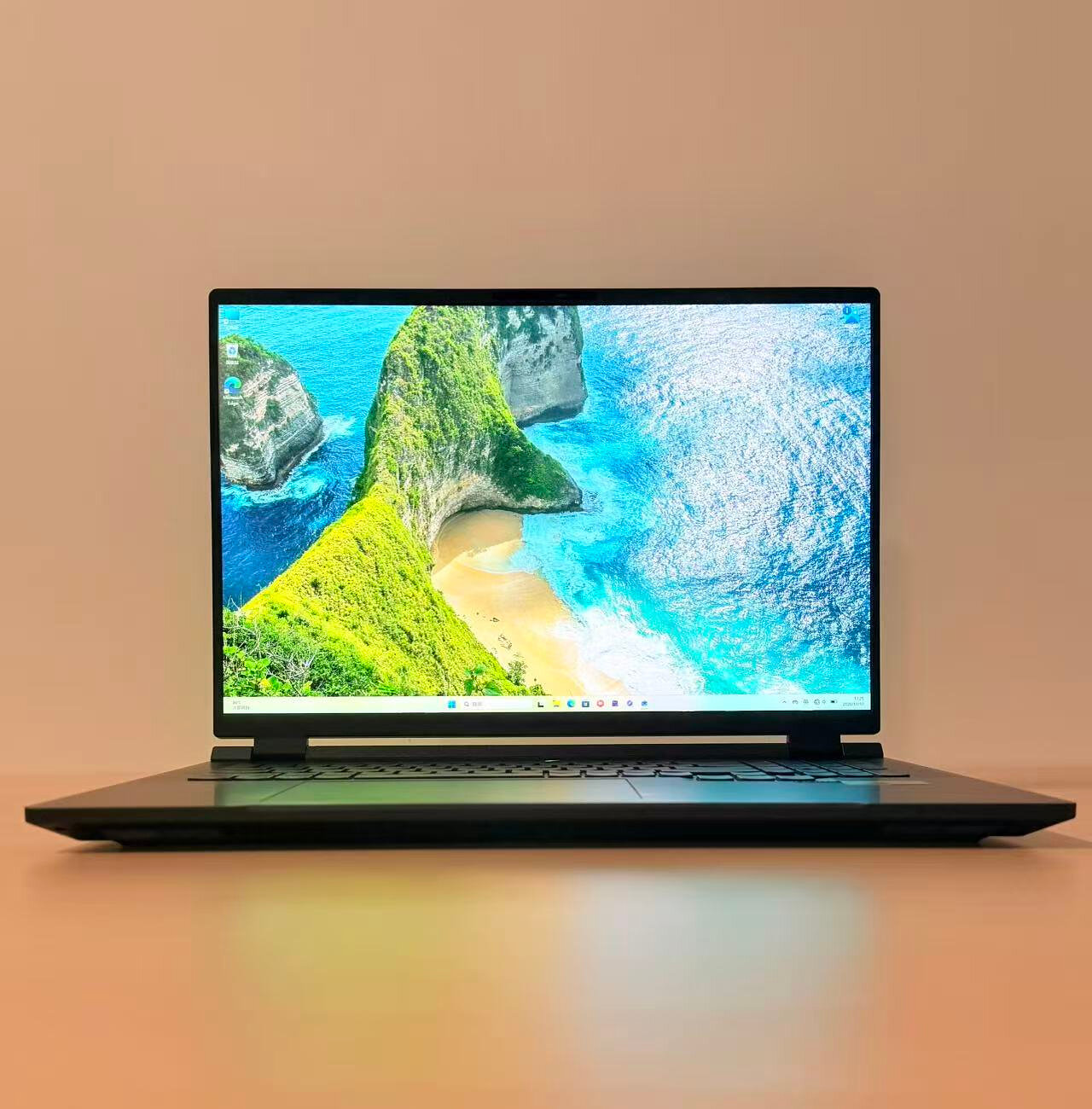
SHENZHEN, China, Nov. 20, 2026 — TCL CSOT became the world's first to achieve mass production of ultrahigh-mobility oxide technology (electron mobility of ~50 cm² V⁻¹ s⁻¹) on an 8.6-generation line. The major technical breakthrough marks the first time high mobility oxide technology has gone beyond the 50 cm² V⁻¹ s⁻¹ threshold in mass production, presenting exciting new possibilities in display applications.
| Keywords: Ultrahigh mobility, 50 cm² V⁻¹ s⁻¹, 8.6-generation mass production, world's first ultrahigh-mobility oxide product
Beyond 50 cm² V⁻¹ s⁻¹: Premium Displays Without the Compromise
For years, the production of high-end displays has involved a series of trade-offs: high refresh rates versus lower power consumption, high resolution versus brightness, and narrow bezels versus cost. The mass production of ultrahigh-mobility oxide technology breaks this deadlock by enabling drive currents that surpass the critical threshold needed to deliver these properties without such compromises.
All-Round Excellence in Image Quality, Energy Efficiency, and Cost
Traditionally, gains in image quality have come at the expense of power consumption. However, the properties of ultrahigh-mobility oxide technology change this on several fronts. Firstly, like all oxide TFTs, the technology offers extremely low off-state current, enabling static images to be held at an ultra-low refresh rate, thereby reducing refresh power consumption. Secondly, higher current drive allows GOA (gate driver on array) and driver circuits to operate with lower voltage swings and shorter charging times. Combined with optimization across the full signal chain, power consumption is also reduced when displaying dynamic images. As a result, ultrahigh-mobility oxide technology allows for improvements in image quality without requiring extra power.
By enabling displays to switch between ultra-low and ultra-high refresh rates in the same panel, the technology also allows high-performance gaming and video applications to exist alongside power-efficient office and reading in one device.
Shrinking the TFT also increases aperture ratio, enabling higher pixel density without sacrificing brightness, so high-resolution screens no longer appear dim. Substantially reduced edge routing greatly improves the screen-to-body ratio, making ultra-narrow bezels a reality for mass-produced displays.
The real value of ultrahigh-mobility oxide technology is in turning what was once a series of trade-offs into a best-of-all-worlds scenario that delivers premium display experiences. Leveraging the scale of TCL CSOT's 8.6-generation production line, these premium displays can now be widely adopted at an affordable cost.
At DTC 2026, TCL CSOT unveiled its own ultrahigh-mobility display technology, setting a new standard for display excellence that will redefine the future for both consumer and professional display applications.
Technology Reimagined: A Seamless Loop from Process to Product
Developing ultrahigh-mobility oxide technology is the result of significant engineering achievements made by TCL CSOT and the team at the Institute of Science Tokyo's MDX Research Center for Element Strategy, led by Prof. Hideo Hosono. Together with Prof. Hosono's team, TCL CSOT has advanced the technology across three fronts—film deposition, device design, and architecture—transforming isolated processes into manufacturable products.
Film Deposition: Ultra-Uniform Oxide Semiconductor System
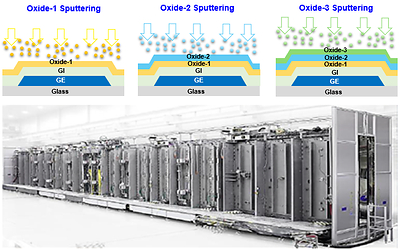
TCL CSOT has taken film deposition beyond conventional processes with the use of continuous rotary-target sputtering and a composite stacked oxide layer design that suppresses defects. A defect repair process further improves the interface, overcoming the stability challenges associated with ultrahigh-mobility materials.
| Key Metrics: Film thickness uniformity U% < 5%, average mobility 51.6 cm² V⁻¹ s⁻¹
Device Core: Precise Control of the Hydrogen–Oxygen Balance in the Insulator
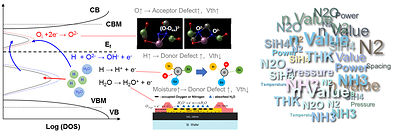
Ultrahigh-mobility devices are highly sensitive to moisture, hydrogen, and oxygen, and any deviation from the optimal hydrogen–oxygen ratio in the insulator can degrade performance. To address this, TCL CSOT has developed a hydrogen–oxygen balance control system for both the front- and back-channel insulators, providing threefold protection.
New Circuit Architecture Unlocks the Potential of Ultrahigh-Mobility Oxide
Alongside its clear benefits, higher mobility also brings new challenges, including weaker gate control, threshold-voltage drift, and increased self-heating. To address these challenges, TCL CSOT has introduced a new GOA architecture alongside optimized device design and improved thermal management to enable the full potential of ultrahigh-mobility oxide to be realized.
Redefining the Limits of LCD Technology
The mass production of ultrahigh-mobility oxide technology gives LCD a major competitive edge in applications such as high-refresh-rate notebooks and high-end monitors, enabling it to compete directly with OLED. Its inherent advantages—low cost, long lifetimes, and no burn-in—combined with high image quality and low power consumption, will offer users a wider choice of high-quality options at a lower price point compared with OLED.
Meanwhile, ultrahigh-mobility oxide technology also shows strong potential in emerging areas such as VR/AR, medical displays, and automotive displays, where its high refresh rates can help reduce motion sickness, its high color fidelity meets high professional requirements, and its high reliability supports use in diverse environments.
From the Laboratory to the Production Line
TCL CSOT has built extensive expertise in oxide technology over the years, progressing from mass production of conventional IGZO in 2024 to 30 cm² V⁻¹ s⁻¹ high-mobility oxide in 2025, and achieving mass production of ultrahigh-mobility oxide in 2026. The latest breakthrough combines device stability comparable to conventional IGZO with excellent voltage endurance and reliability, marking a major step from the laboratory to production and lays the foundations for future product iterations and scale expansion.
SOURCE TCL CSOT
About TCL CSOT
Established in 2009, TCL China Star Optoelectronics Technology Co., Ltd. (TCL CSOT) is a leading global innovator in display technologies. Its LCD, OLED, and MLED solutions power applications across TVs, smartphones, tablets, laptops, monitors, automotive systems, VR/XR, and commercial displays. With a clear strategic direction set by its advanced display technology brand APEX, TCL CSOT invests continuously and strategically in R&D, driven by a mission to amaze, protect and inspire all people through endlessly innovative display technology. As part of TCL's Worldwide Olympic Partnership, TCL CSOT is proud to deliver display solutions that elevate experiences on the global stage.